Headache and migraine assessment and treatment.
Headache and migraine can be deeply debilitating, affecting a person's ability to work, study, exercise, socialise and manage everyday life. Headache and migraine can affect much more than pain alone. Some people also experience neck discomfort, dizziness, visual sensitivity, nausea, fatigue, reduced exercise tolerance or difficulty concentrating.
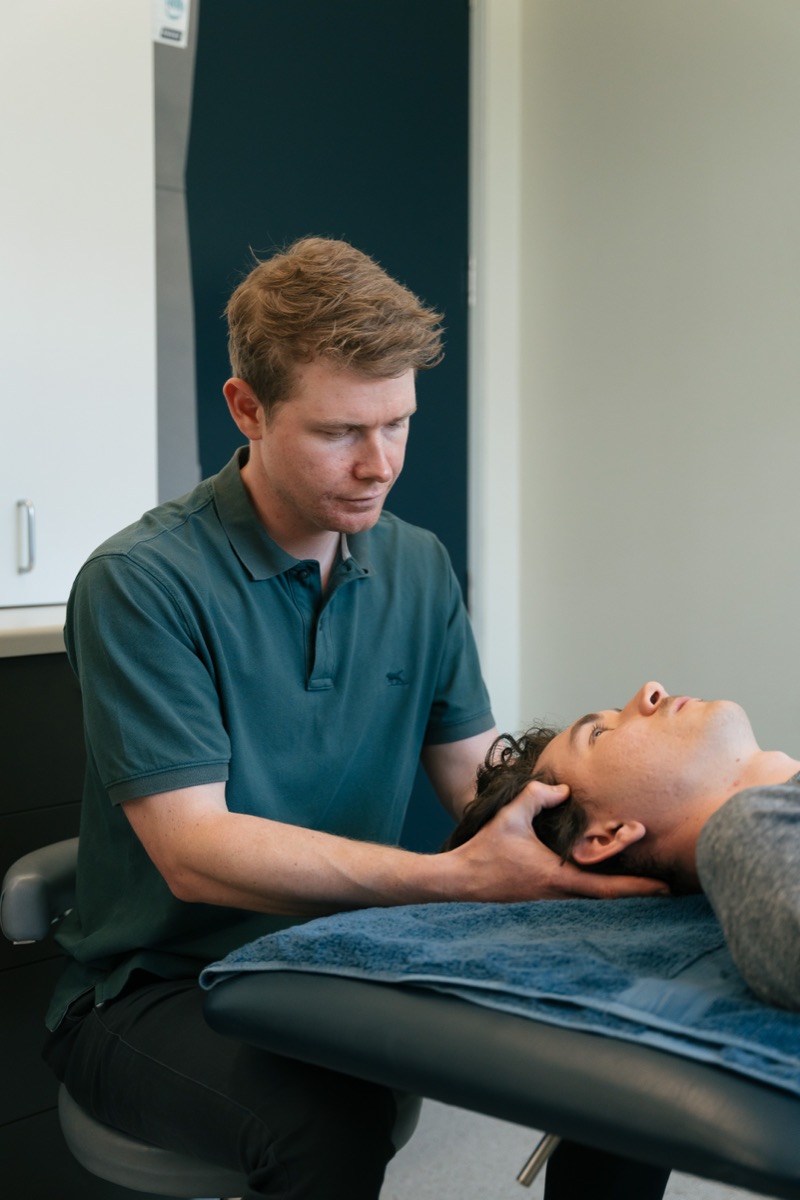
At the Bendigo and Ballarat Concussion Clinic, headache and migraine assessment is guided by your symptoms, history and goals. Our approach focuses on identifying factors including the neck, vestibular function, balance, eye movements, visual motion sensitivity and exercise tolerance, so treatment can be matched to what is actually contributing to your presentation.
01 / Understanding
Understanding headache and migraine.
Headache
Headache is a symptom rather than one single condition. There are many different types of headache, and each can have different causes, triggers and symptoms. Some headaches may be related to the neck, muscles, joints, balance system, visual system or changes following a concussion.
Migraine
Migraine is a neurological condition. It can involve headache, but it may also include nausea, sensitivity to light or sound, visual symptoms, dizziness, fatigue or difficulty functioning during an attack. Symptoms and contributing factors vary from person to person, which is why accurate medical diagnosis can be important. Assessment focuses on musculoskeletal, vestibular, visual and exercise-related factors that may be relevant to your symptoms.
02 / Conditions
Conditions we commonly assess.
Migraine
Migraine is more than “just a headache”. It is a neurological disorder that can involve moderate to severe head pain, nausea, sensitivity to light or sound, visual symptoms, dizziness, and worsening with normal activity. Some people also notice neck discomfort, fatigue, or difficulty concentrating. Physiotherapy may not replace medical diagnosis or migraine medication management, but assessment when your migraine is accompanied by headache neck pain, dizziness, motion sensitivity, visual strain, or difficulty returning to normal activity is paramount to treat and manage your migraine.
Migraine with aura
Some people experience migraine with aura, where temporary neurological symptoms come on gradually and are fully reversible. Aura may include flashing lights, blind spots, tingling, numbness, or changes in speech, and is often followed by headache, although it can happen without headache as well. Because aura can overlap with other neurological presentations, an accurate medical diagnosis is important, especially if symptoms are new, prolonged, or unusual for you.
Menstrual migraine
Menstrual migraine refers to migraine attacks that occur around menstruation. In the International Headache Society classification, menstrual attacks most often occur in the window from two days before bleeding starts to three days after it begins, and they commonly happen without aura. Tracking symptoms in a diary can be useful when this pattern is suspected. Physiotherapy can still be relevant if menstrual migraine occurs alongside neck discomfort, dizziness, reduced activity tolerance, or difficulty managing daily function, but medical guidance remains important.
Hemiplegic migraine
Hemiplegic migraine is a type of migraine with aura that includes temporary motor weakness, along with other possible symptoms such as visual changes, sensory symptoms, or speech disturbance. The weakness is reversible, but episodes can be alarming and may overlap with other neurological conditions. Medical assessment is important, particularly if symptoms are occurring for the first time or feel different from your usual pattern. Physiotherapy can play a supportive role in the management of symptoms once the condition has been properly assessed.
Vestibular migraine
Vestibular migraine can involve dizziness, vertigo, imbalance, motion sensitivity, or discomfort in busy visual environments, with or without a prominent headache. Episodes can last from minutes to hours, and the pattern often overlaps with other vestibular or neurological conditions. Assessment is important when dizziness occurs alongside a history of migraine, visual sensitivity, balance problems, or difficulty tolerating movement and everyday environments. Vestibular, ocular and cervical rehabilitation may be considered as one part of care when assessment identifies relevant vestibular or motion-sensitivity problems.
Abdominal migraine
Abdominal migraine is a recognised migraine-related disorder seen mainly in children. It usually involves recurrent episodes of moderate to severe midline or poorly localised abdominal pain, often with nausea, vomiting, pallor, and normal periods between episodes. Headache is typically not the main feature during the attack. Because other gastrointestinal causes need to be ruled out, medical assessment is important.
Cyclic vomiting syndrome
Cyclic vomiting syndrome is another recognised migraine-related disorder, usually involving repeated episodes of intense nausea and vomiting with complete recovery between attacks. It is more common in childhood, although it can occur in adults. The episodes tend to be stereotyped for the individual person and may seem to follow a pattern. Because other gastrointestinal and medical causes need to be excluded, medical diagnosis is essential.
Tension-type headache
Tension-type headache commonly feels like pressure, tightness, or a band-like ache around the head or in the temples. It is often milder than migraine, but it can still affect concentration, energy, and daily function. It is usually pressing or tightening rather than throbbing, is often not worsened by routine activity, and may occur with neck or shoulder discomfort. Tension-type headache is not simply caused by “tight muscles”, and symptoms can overlap with other headache types, so assessment is still important.
Cluster headache
Cluster headache is a severe headache disorder that usually causes intense one-sided pain around the eye, temple, or forehead. Attacks may be accompanied by watering of the eye, eyelid drooping, a blocked or runny nose, or marked restlessness. These attacks often occur in bouts or “clusters” with some type of cyclical pattern.
Post-concussion syndrome
Persistent symptoms after concussion are sometimes still referred to as post-concussion syndrome. Headache is one of the most common ongoing symptoms, but it rarely has a single explanation. In some people, the pattern resembles migraine or cervicogenic headache, while in others it may also involve dizziness, visual symptoms, balance problems, exercise intolerance, fatigue, or difficulty returning to work, school, or sport. Physiotherapy assessment and treatment can help identify whether cervical, vestibular, oculomotor, exercise-tolerance, or pacing factors are contributing to ongoing symptoms, then using these findings, successfully treat the symptoms.
03 / Physiotherapy
When physiotherapy can be helpful.
Physiotherapy can be helpful when headache or migraine is accompanied by neck pain or stiffness, symptoms influenced by neck movement or sustained posture, dizziness, imbalance, visual motion sensitivity, difficulty with busy environments, reduced exercise tolerance, ongoing symptoms after concussion, or trouble returning to work, school, exercise or sport.
For people looking for headache or migraine treatment in Bendigo or Ballarat, our clinic is an important part of assessing and treating the contributing factors. It is one part of care, and not always the whole picture. Some people are best managed with combined support from a GP, neurologist or other healthcare professional.
04 / Assessment
What the initial assessment may include.
Your initial appointment is guided by your symptoms and history. Depending on your presentation, the assessment may include:
- A detailed history of your headache or migraine symptoms
- Discussion of frequency, severity, pattern and possible triggers
- Screening for symptoms that need medical review
- Cervical spine and upper neck assessment
- Balance and vestibular assessment
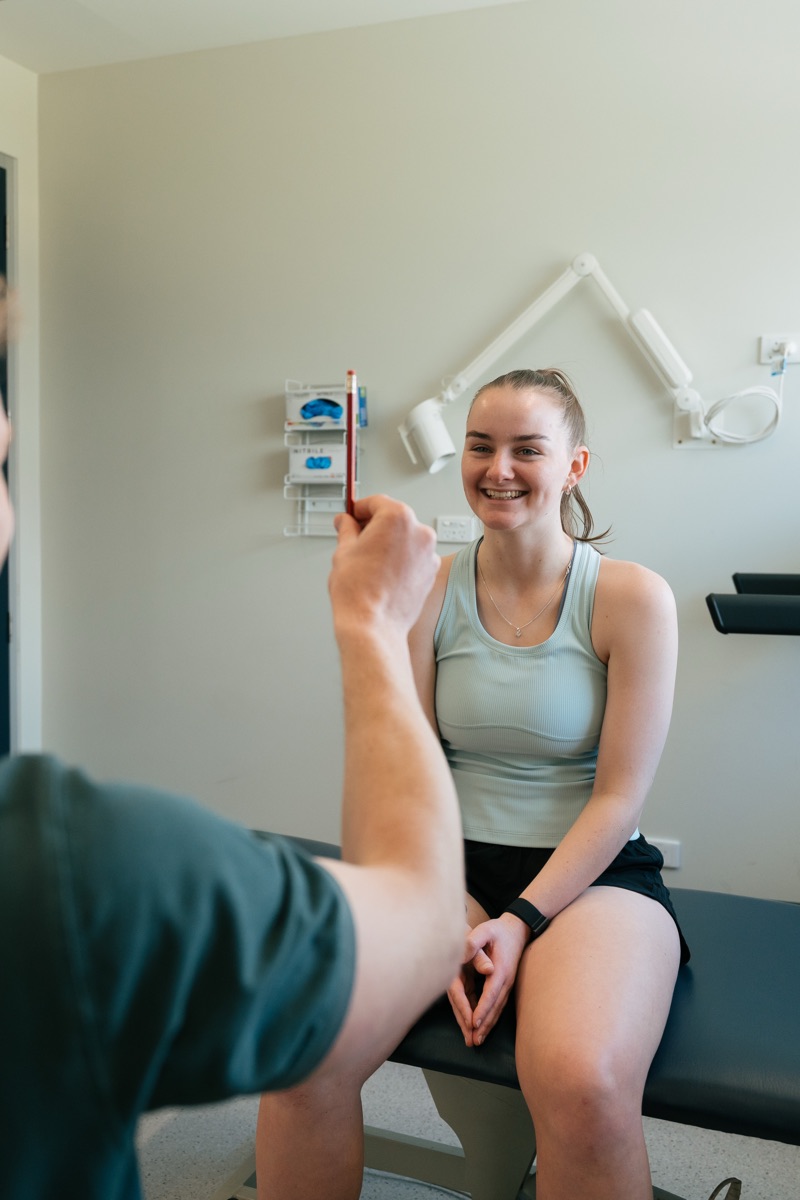
- Eye movement and visual function screening
- Visual motion sensitivity assessment
- Exercise-tolerance assessment
- Autonomic or orthostatic screening
- Review of sleep, activity, pacing and symptom-management strategies
- Discussion of how symptoms affect work, school, exercise and daily life
Not every person needs every component. The assessment is tailored to what is clinically relevant.
05 / Treatment
Treatment and management options.
Cervical physiotherapy
- When assessment suggests the neck is contributing to symptoms, treatment may include cervical physiotherapy, manual therapy where appropriate, and specific exercises to improve movement, strength and control.
Vestibular rehabilitation
- If dizziness, imbalance or motion sensitivity are relevant, vestibular rehabilitation may be used to gradually improve tolerance to movement and everyday environments.
Visual & oculomotor rehabilitation
- If testing identifies problems with eye movements, visual tracking or visual motion sensitivity, treatment may include targeted exercises and strategies to reduce symptom aggravation and improve tolerance.
Graded exercise & exercise-tolerance rehabilitation
- When symptoms are linked to reduced activity tolerance, a gradual exercise program may be used to rebuild confidence and improve tolerance to physical effort in a measured way.
Education, pacing & trigger management
- Education is an important part of care. This may include understanding symptom patterns, managing activity load, pacing, sleep and recovery habits, and identifying when gradual exposure is more useful than simply avoiding every possible trigger.
Working with your healthcare team
- Some people may also benefit from care from a GP, neurologist, optometrist or neuro-optometrist, psychologist, dietitian or other relevant health professional. Where appropriate, we can work alongside your broader healthcare team to support a coordinated plan.
06 / Safety
When to seek urgent medical care.
Urgent medical assessment is important if you develop a new or severe headache, especially if it is:
- Sudden in onset or the worst headache you have experienced
- Associated with new weakness, numbness, facial droop or difficulty speaking
- Linked with confusion, collapse or seizure
- Accompanied by fever and neck stiffness
- Causing significant vision loss
- Related to a significant injury
- Associated with persistent vomiting
- Rapidly worsening or clearly different from your usual symptoms
This is not an exhaustive list and is not medical advice. If you are unsure, or your symptoms concern you, seek prompt medical assessment. If in doubt, always err on the side of caution. In a medical emergency, or if symptoms are severe or rapidly worsening, call 000 or attend your nearest emergency department. This information does not replace advice from a qualified medical practitioner who has assessed you in person.
07 / FAQ
Frequently asked questions.
Do I need a referral?
Not always. Some people book directly, while others are referred by their GP or another healthcare professional. If your headache is new, severe, unusual or has not been medically assessed, medical review may be appropriate first.
Can neck problems contribute to headaches?
Yes, in some people they can. Neck dysfunction may contribute to certain headaches, including some cervicogenic headaches, but not all headaches come from the neck.
Can you help with headaches after concussion?
Yes, this is a common reason people attend the clinic. Post-concussion headache treatment may involve assessment of cervical, vestibular, visual and exercise-tolerance factors depending on your presentation.
Do I need to stop taking migraine medication?
No. Do not stop or change migraine medication unless you have discussed this with your prescribing doctor or other appropriate healthcare professional.
How many appointments will I need?
This depends on your symptoms, assessment findings, how long the problem has been present and how you respond to treatment. Some people need short-term guidance, while others benefit from a longer rehabilitation plan. Usually we see significant improvement between 3-5 appointments.
Can headache treatment include vestibular or visual rehabilitation?
Yes, when assessment shows those areas are relevant. Vestibular migraine physiotherapy, visual rehabilitation or oculomotor exercises may be included if dizziness, motion sensitivity or visual symptoms are part of the presentation.
Book a Consultation
Our team is dedicated to providing the utmost quality of care and treatment. Reach out to start your recovery journey.