Key points
- Strict rest in a dark room until every symptom clears is no longer recommended as routine concussion management.
- Guidelines recommend relative rest for the first 24 to 48 hours, followed by a gradual return to appropriate daily and physical activity.
- A 2023 systematic review found early light activity and prescribed aerobic exercise were associated with recovery about 4.6 days earlier on average, while strict rest until symptoms resolved was not effective.
- This does not mean exercising through symptoms. Activities with a significant risk of another head injury still need appropriate clearance first.
What the advice used to be
For many years, people with concussion were commonly told to rest in a dark room and avoid physical or mental activity until every symptom disappeared. Current evidence has changed that approach.
What current guidelines recommend
Australian and Aotearoa New Zealand guidelines recommend relative rest rather than strict rest during the first 24 to 48 hours, followed by a gradual return to appropriate daily and physical activity. Complete isolation and prolonged inactivity are not recommended as routine concussion management. Activities with a significant risk of another head injury remain a separate issue and should not be resumed until appropriate clearance has occurred.
What the research shows
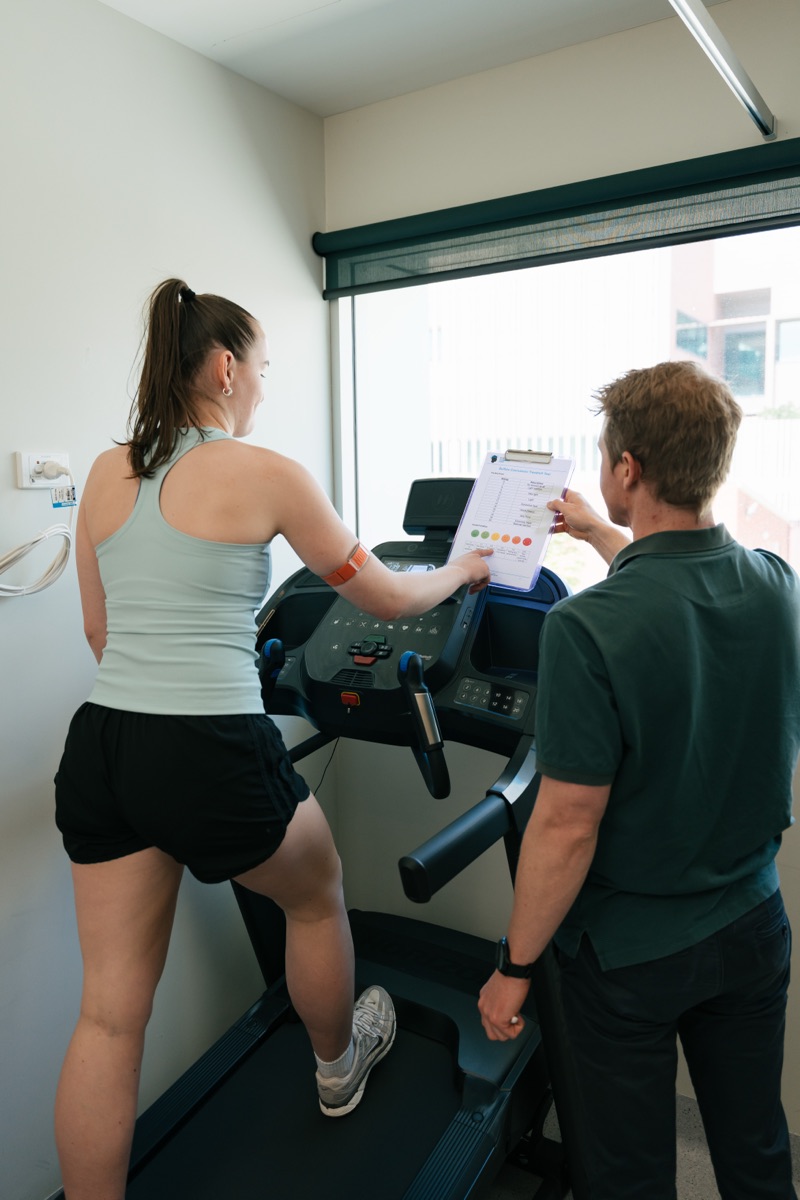
This change is supported by research. A 2023 systematic review and meta-analysis found that early light physical activity and appropriately prescribed aerobic exercise were associated with faster recovery after sport-related concussion, while strict physical rest until all symptoms had resolved was not effective. In the pooled analysis, physical activity or prescribed exercise was associated with recovery approximately 4.6 days earlier on average.
A randomised clinical trial in adolescents also found faster recovery with individualised, below-symptom-threshold aerobic exercise compared with a stretching programme, although results from adolescents should not automatically be generalised to every person with concussion.
The key message
The key message is not “exercise through your symptoms”. Rather, contemporary concussion care generally uses a gradual, individualised return to activity.
Discuss your recovery with us
If concussion is making it difficult to return to normal activity, work or sport, a clinical assessment may help determine an appropriate pathway. Book a consultation with our clinic to discuss your recovery and whether physiotherapy may be relevant.
Key evidence
- Leddy, J. J., Burma, J. S., Toomey, C. M., et al. (2023). Rest and exercise early after sport-related concussion: A systematic review and meta-analysis. British Journal of Sports Medicine, 57, 762–770. DOI: 10.1136/bjsports-2022-106676.
Included 46 human studies, of which 34 were considered acceptable or low risk of bias. A meta-analysis of seven studies found physical activity or prescribed exercise was associated with recovery 4.64 days earlier on average, and concluded that strict physical rest until symptom resolution is not effective. - Patricios, J. S., Schneider, K. J., Dvorak, J., et al. (2023). Consensus statement on concussion in sport: Amsterdam 2022. British Journal of Sports Medicine, 57, 695–711. DOI: 10.1136/bjsports-2023-106898.
International evidence-informed consensus supporting relative rest followed by gradual activity rather than prolonged complete rest. - Australian and Aotearoa New Zealand Concussion Guideline Development Group. Return to Activity. Current guideline accessed 9 September 2026.
Provides strong evidence-based recommendations against strict rest until complete symptom resolution, and supports relative rest for 24 to 48 hours followed by graded, low-risk physical activity. It also separates ordinary activity from activities carrying repeat-injury risk. - Leddy, J. J., Haider, M. N., Ellis, M. J., et al. (2019). Early subthreshold aerobic exercise for sport-related concussion: A randomized clinical trial. JAMA Pediatrics, 173, 319–325. DOI: 10.1001/jamapediatrics.2018.4397.
Randomised controlled trial in adolescents with sport-related concussion. Median recovery was 13 days with individualised subthreshold aerobic exercise, versus 17 days in the stretching comparison group.
This article is general information and is not a substitute for individual assessment, diagnosis or advice from a qualified health professional. A diagnosis of concussion must be obtained from a medical practitioner. If you are concerned about a medical emergency, call emergency services straight away. To discuss your own situation, get in touch or book a consultation.